Tanning & Melanocortin Peptides
Three compounds. Five receptors. One family. The melanocortin peptide class diverges sharply based on which MC receptor each compound prefers — and those preferences are what drive every downstream research application.
The Three Compounds
Available as lyophilized powder · ≥98% HPLC verified · research use only.
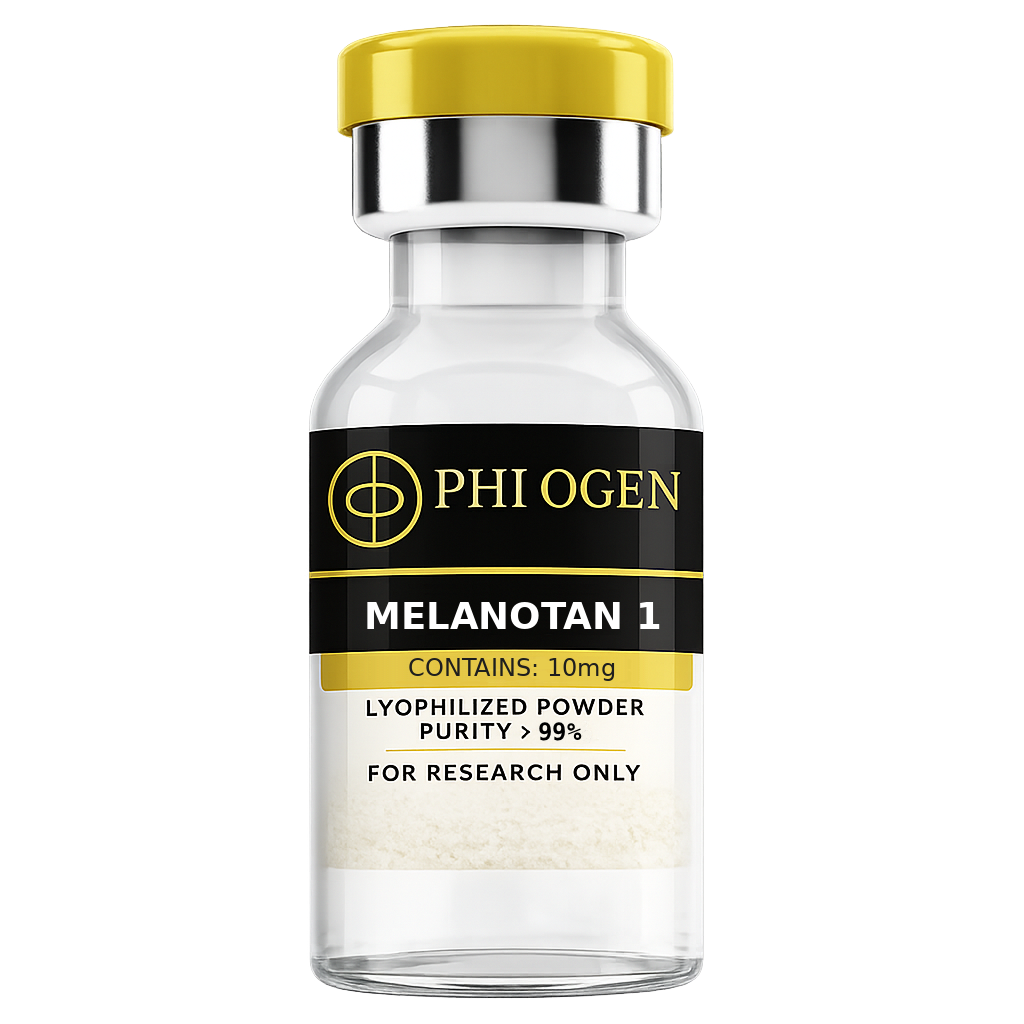
Melanotan I 10mg
Buy Melanotan I 10mg online — research-grade lyophilized peptide for laboratory use. Afamelanotide (NDP-α-MSH). ≥98% HPLC purity verified.
CAS: 75921-69-6
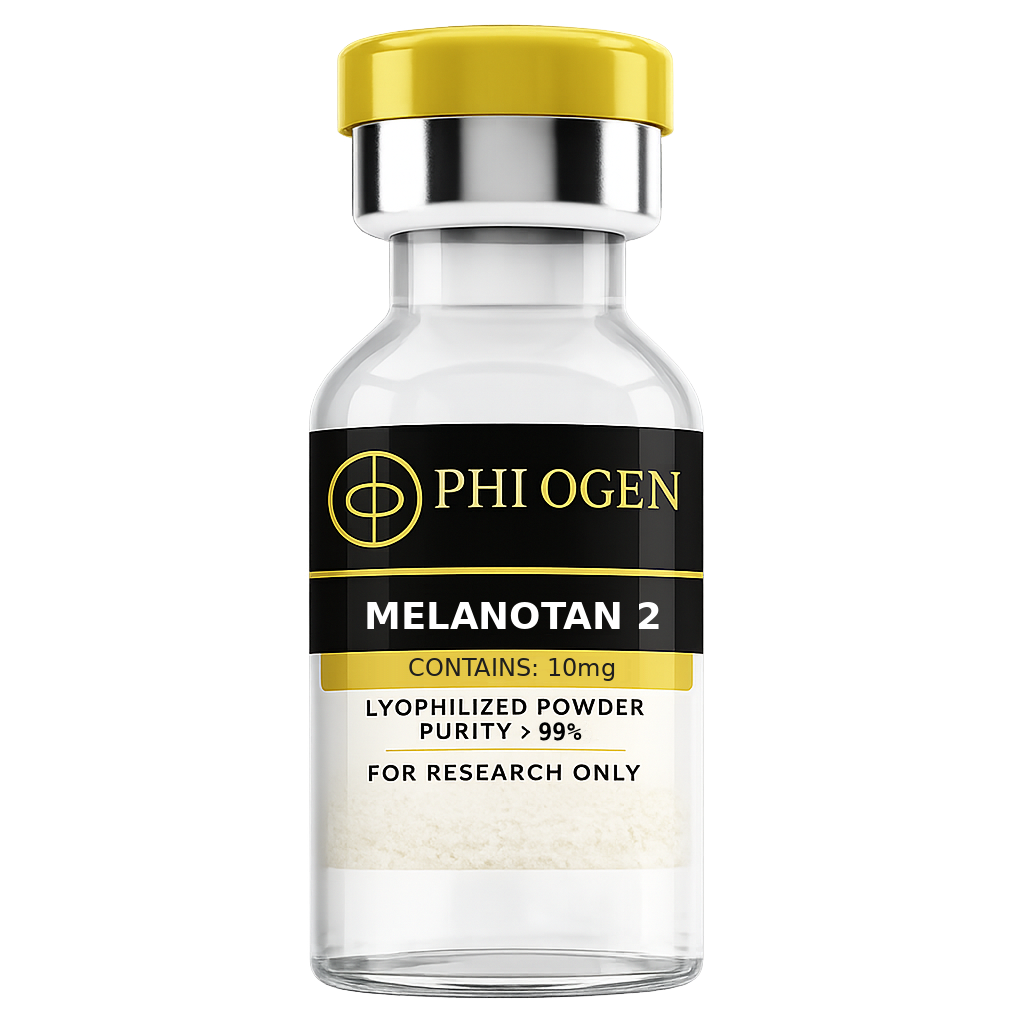
Melanocortin Receptor Selectivity
Human cells express five distinct melanocortin receptors (MC1R through MC5R). Each compound prefers a specific subset. The selectivity matrix below maps which compound engages which receptor — and therefore which research application it fits.
Compound
Melanotan-113 amino acids · cyclic α-MSH analog
- MC1R
- Primary — melanogenesis
- MC3R
- Minimal
- MC4R
- Minimal
- MC5R
- Minimal
Clinical status
FDA-approved as Scenesse (EPP indication)
Narrow receptor profile — research focus on MC1R-driven melanin synthesis. Cleaner side-effect profile than MT-2 due to selectivity.
Compound
Melanotan-27 amino acids · broader α-MSH analog
- MC1R
- Active — melanogenesis
- MC3R
- Active — downstream effects
- MC4R
- Active — libido/satiety signaling
- MC5R
- Mild
Clinical status
Not FDA-approved · research use only
Broader receptor profile produces additional melanocortin-system effects beyond pigmentation — appetite suppression, nausea, libido changes in research reports.
Compound
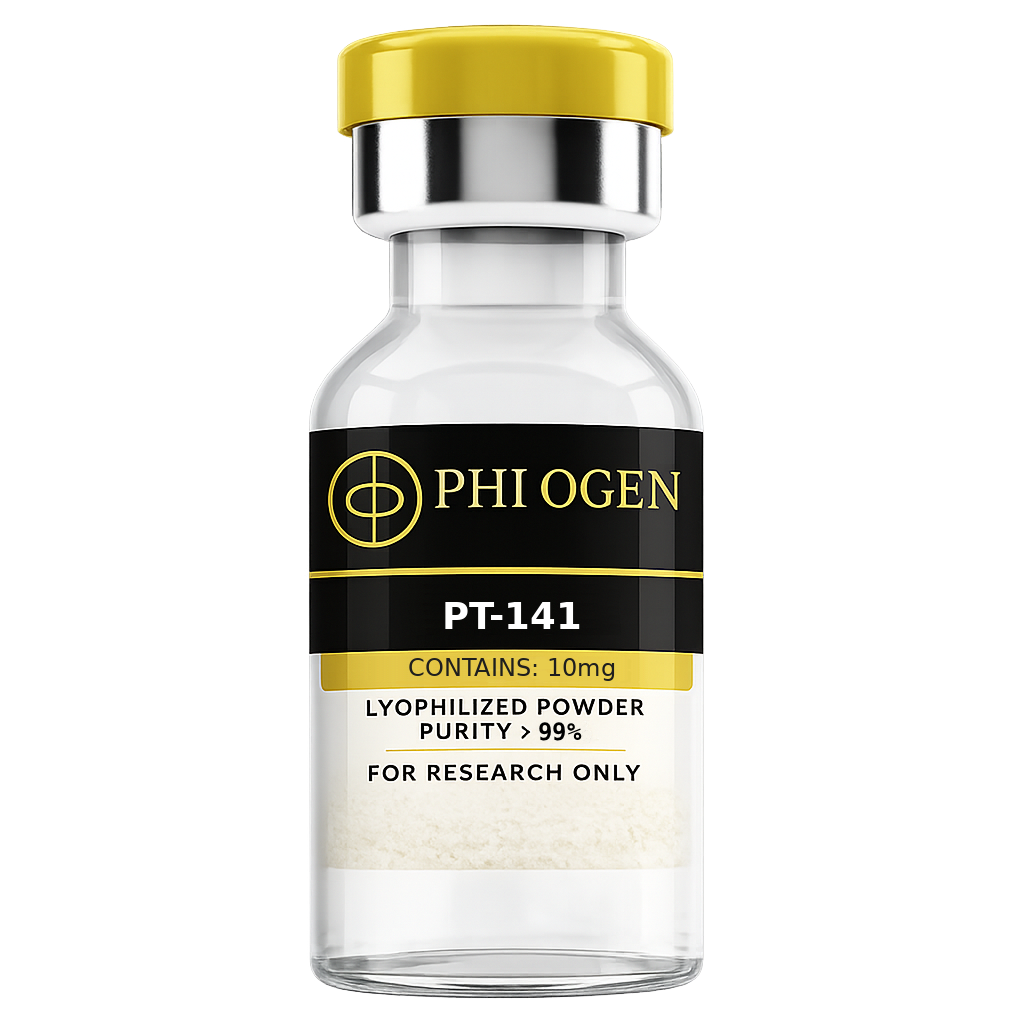
PT-141 (Bremelanotide)7 amino acids · MT-2 metabolite
- MC1R
- Minimal
- MC3R
- Primary
- MC4R
- Primary — sexual-arousal pathway
- MC5R
- Mild
Clinical status
FDA-approved as Vyleesi (HSDD indication)
Optimized away from MC1R. Negligible tanning effect — distinct research application in sexual-function research despite shared melanocortin family.
How MC1R Drives Melanogenesis
When MC1R is activated in melanocytes, it upregulates tyrosinase — the rate-limiting enzyme in melanin synthesis. This shifts pigment production frompheomelanin (red/yellow) toward eumelanin (brown/black), producing the observable tanning effect over 2–4 weeks of research protocol duration.
Melanotan-1 was engineered for this specific pathway. Melanotan-2's broader receptor activity captures MC1R melanogenesis as a side effect of its primary MC3R/MC4R engagement — which also explains the nausea, appetite suppression, and libido changes reported alongside tanning in MT-2 research.
Before You Research Melanocortin Peptides
Question 01
What is the difference between Melanotan-1 and Melanotan-2?
Melanotan-1 (13 AA) is selective for the MC1R melanocortin receptor that drives melanin synthesis. Melanotan-2 (7 AA) also engages MC3R and MC4R for broader melanocortin-system activation. MT-1 has a narrower receptor profile; MT-2 has wider downstream effects.
Question 02
Is PT-141 a tanning peptide?
PT-141 (Bremelanotide) is a Melanotan-2 metabolite optimized for MC3R/MC4R activity. It has minimal MC1R engagement — meaning it does not effectively drive melanogenesis. FDA approved it as Vyleesi for HSDD, distinct from the tanning-research use case.
Question 03
Is Melanotan-1 the same as the FDA-approved Scenesse?
Yes — Melanotan-1 is the research-grade equivalent of afamelanotide (Scenesse), which is FDA-approved for erythropoietic protoporphyria in a narrow patient population. Research-grade MT-1 is not formulated or regulated as a therapeutic product.
Question 04
How do melanocortin receptors regulate pigmentation?
MC1R activation in melanocytes upregulates tyrosinase, the rate-limiting enzyme in melanin synthesis. This shifts pigment production from pheomelanin (red/yellow) toward eumelanin (brown/black), producing the observable tanning effect.