IGF-1 LR3 in Anti-Aging Research: Growth Factors and the Longevity Paradox
Research overview of IGF-1 LR3 — the extended half-life IGF-1 analog — covering its role in the GH/IGF-1 axis, anabolic mechanisms, and the complex relationship between IGF-1 signaling and longevity research models.
The GH/IGF-1 Axis in Aging
Growth hormone (GH) and its downstream mediator Insulin-like Growth Factor-1 (IGF-1) form one of the most important endocrine axes in human physiology — and one of the most complex in the context of aging research.
The Age-Related Decline
GH secretion declines dramatically with age:
- Peak GH pulsatility occurs in adolescence and early adulthood
- GH pulse amplitude declines ~14% per decade after age 20
- By age 60-70, many individuals have GH secretion rates similar to GH-deficient adults
- This decline is called "somatopause"
- IGF-1 levels typically peak in the 20s and decline ~50% by age 70
- IGF-1 decline correlates with loss of lean mass, increased adiposity, reduced bone density, and impaired physical function
IGF-1 LR3: The Extended Half-Life Analog
Why IGF-1 LR3 vs. Native IGF-1
Native IGF-1 has a very short half-life (~12-15 minutes) because it binds avidly to IGF binding proteins (IGFBPs), particularly IGFBP-3. This rapid clearance makes it impractical for most research models requiring sustained receptor engagement.
IGF-1 LR3 (Long R3 IGF-1) addresses this through two modifications:
- Arg(R) substitution at position 3: Reduces IGFBP-3 binding affinity by ~100-fold
- 13-amino acid N-terminal extension: Further reduces binding protein affinity
Receptor Binding
IGF-1 LR3 binds the IGF-1 receptor (IGF-1R) with similar affinity to native IGF-1. The extended half-life means sustained receptor activation is achievable in cell culture and in vivo models without continuous dosing.IGF-1 Signaling Mechanisms
The PI3K/Akt/mTOR Pathway
The primary anabolic arm of IGF-1 signaling:- IGF-1 binds IGF-1R (receptor tyrosine kinase)
- Autophosphorylation of IGF-1R activates IRS-1/IRS-2
- IRS activates PI3K, generating PIP3
- PIP3 recruits and activates Akt (PKB)
- Akt activates mTORC1 (via TSC1/2 inhibition)
- mTORC1 phosphorylates 4E-BP1 and S6K1 — driving protein synthesis
The MAPK/ERK Pathway
The proliferative arm:- IRS activation also recruits Grb2-SOS complex
- Activates Ras-Raf-MEK-ERK cascade
- ERK promotes cell cycle progression (G1/S transition)
- Upregulates cyclin D1 and downregulates p27
Shop Clavicular's Protocol
Research-grade Retatrutide and BPC-157 from our trusted research supplier — the exact peptides behind the most viral looksmaxxing transformation.
The Longevity Paradox
Here is the complexity that makes IGF-1 research genuinely interesting for longevity scientists:
Evidence That Lower IGF-1 Extends Lifespan
- Daf-2 mutants (C. elegans IGF-1 receptor knockout): 2-3x lifespan extension — one of the largest lifespan extensions ever recorded
- Ames and Snell dwarf mice (GH/IGF-1 deficient): 40-65% lifespan extension in mouse models
- Human centenarian studies: Some studies find lower IGF-1 levels in long-lived individuals; FOXO3 variants (downstream of IGF-1 signaling) associated with longevity
Evidence That Higher IGF-1 Improves Healthspan
- GH deficiency in adults: Associated with metabolic syndrome, cardiovascular risk, impaired cognition, and reduced quality of life
- GH replacement studies: Improve lean mass, bone density, and lipid profiles in GH-deficient adults
- Physical function: Low IGF-1 in elderly correlates strongly with frailty, sarcopenia, and mortality in epidemiological studies
Resolving the Paradox: Healthspan vs. Lifespan
The current research consensus:
- Maximum lifespan may be extended by low IGF-1 (reduced mTOR-driven cellular aging, increased autophagy)
- Healthspan (functional quality of life) is impaired by low IGF-1 (sarcopenia, cognitive decline, metabolic dysfunction)
- The J-curve: Optimal IGF-1 for human health may be in the mid-normal range — too low causes sarcopenia and metabolic dysfunction; too high may accelerate certain cancers and cell senescence
IGF-1 LR3 Research Applications
Sarcopenia and Muscle Aging Models
- Aged rodent models of sarcopenia (involuntary muscle loss)
- Satellite cell (muscle stem cell) activation assays
- Protein synthesis measurement (SUnSET, puromycin incorporation)
Neuroprotection
- IGF-1R signaling in neurons is neuroprotective (reduces amyloid processing, supports BDNF)
- Alzheimer's disease models: IGF-1 LR3 effect on tau phosphorylation and amyloid clearance
Bone and Metabolic Research
- Osteoblast differentiation and bone formation assays
- Insulin sensitization models (IGF-1R/IR cross-activation)
Epithalon and IGF-1: Research Connections
Epithalon's longevity research and IGF-1 signaling intersect in the context of:
- GH axis and pineal gland: Melatonin (restored by Epithalon) modulates pulsatile GH secretion — documented in aging rodent studies
- Telomere-mTOR crosstalk: mTOR activation (downstream of IGF-1) drives cellular senescence; telomere maintenance (Epithalon) may reduce the p53/p21-mediated mTOR activation seen in telomere-driven senescence
- Complementary anabolic/longevity protocol: For researchers studying combined anti-aging approaches, Epithalon addresses upstream genomic aging while IGF-1 LR3 addresses downstream anabolic decline
Build Clavicular's Stack
Research-grade Retatrutide + BPC-157 from our trusted research supplier. The exact protocol behind Clavicular's viral looksmaxxing transformation.
Featured Products
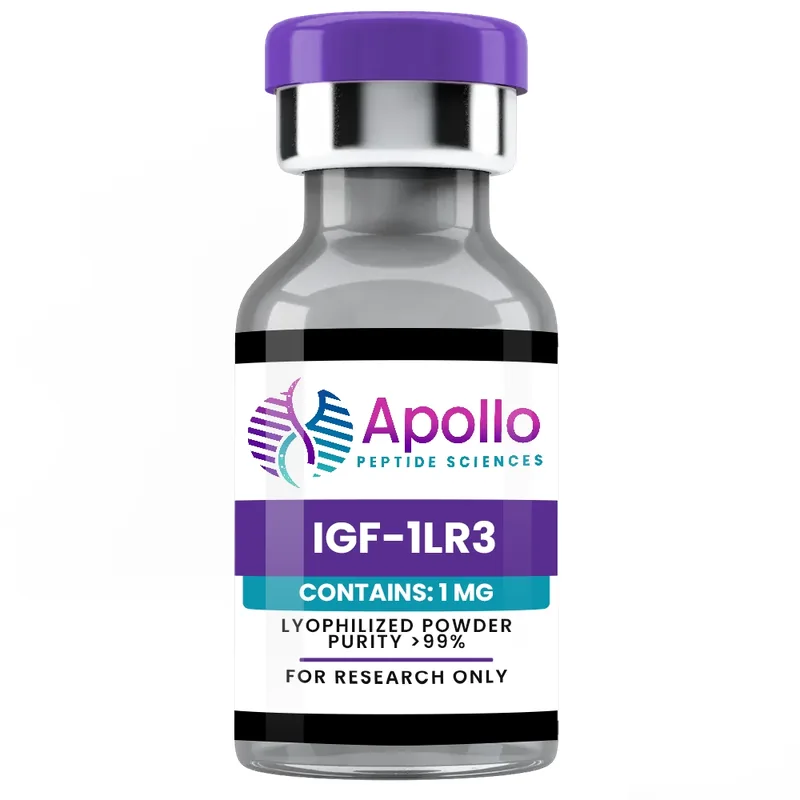
IGF-1 LR3 1mg
IGF-1 LR3 is a modified analog of Insulin-like Growth Factor-1 (IGF-1) with an extended half-life (~20–30 hours vs. ~12–15 min for native IGF-1). IGF-1 mediates many of GH's anabolic effects and declines substantially with age. Research investigates IGF-1 LR3 in cellular proliferation models, satellite cell activation, protein synthesis signaling, and the GH/IGF-1 axis in aging — a pathway closely related to epithalon's longevity mechanisms.
CAS: 946870-92-4
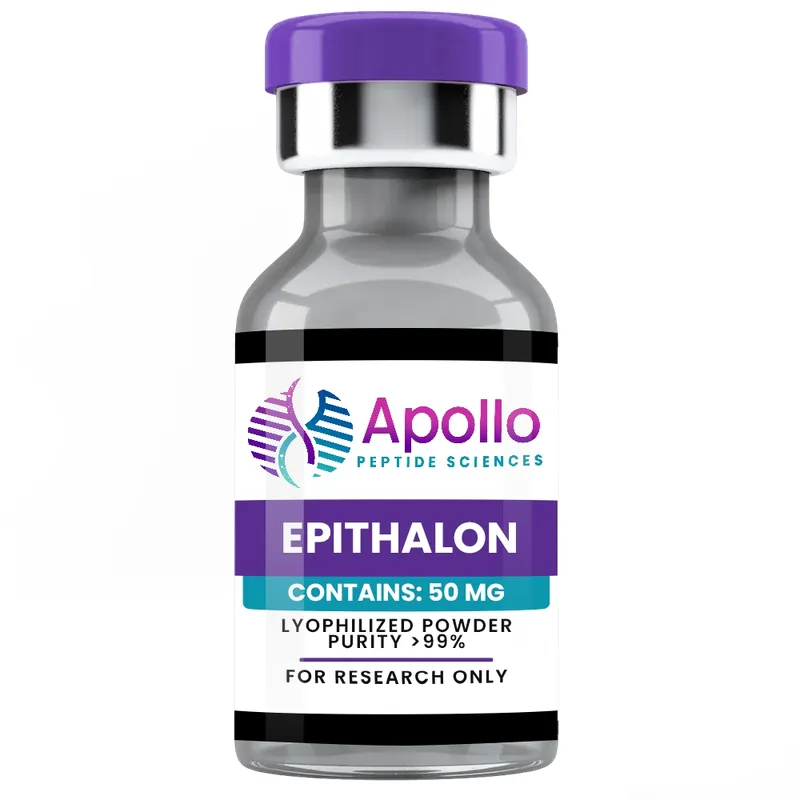
Epithalon 50mg
A synthetic tetrapeptide (Ala-Glu-Asp-Gly) derived from the natural pineal peptide epithalamin. The most studied peptide bioregulator — 40+ years of research covering telomerase activation, telomere elongation, anti-aging, melatonin regulation, and lifespan extension in rodent models. Supplied as lyophilized powder for laboratory research.
CAS: 307297-39-8