Research Specifications
- Sequence:
- H-Ala-Glu-Asp-Gly-OH
- CAS Number:
- 307297-39-8
- Molecular Weight:
- 482.46 Da
- Form:
- Lyophilized powder
- Purity:
- ≥98% (HPLC verified)
- Storage:
- −20°C long-term / 4°C up to 4 weeks reconstituted
- Reconstitution:
- Bacteriostatic water or sterile saline
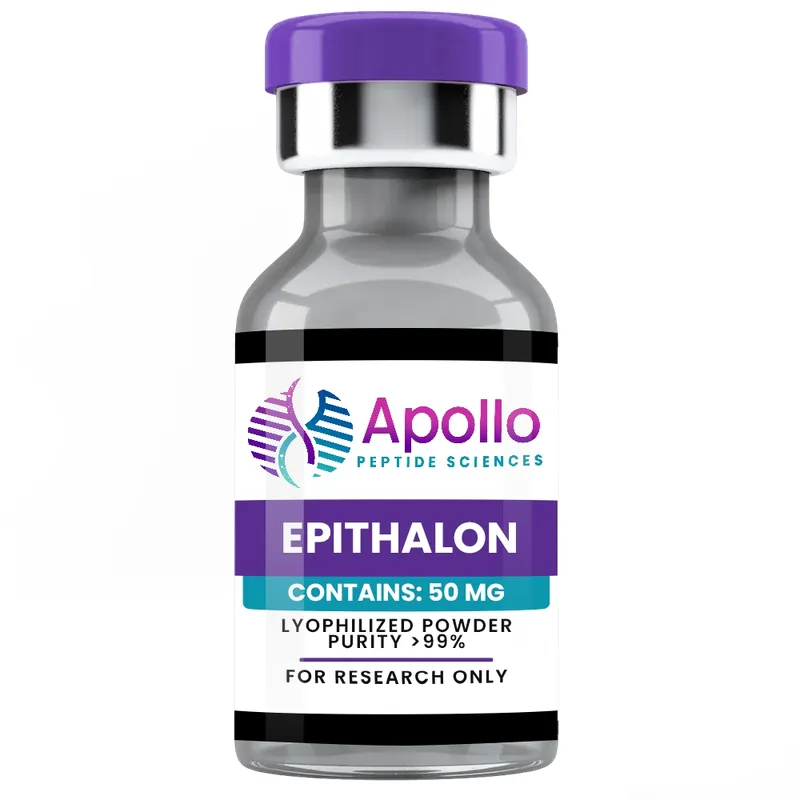
Epithalon 50mg
Tetrapeptide Ala-Glu-Asp-Gly — Khavinson's pineal bioregulator. Researched for telomerase activation, telomere elongation, and circadian rhythm restoration in aged tissue models.
Telomerase Activation & Pineal Bioregulation
Epithalon (Epitalon, tetrapeptide Ala-Glu-Asp-Gly, CAS: 307297-39-8) is a synthetic version of the natural peptide Epithalamin isolated from bovine pineal gland extracts by Vladimir Khavinson. Its primary researched mechanism involves activation of telomerase (hTERT) — the enzyme that extends telomere length. Telomerase is active in germline and stem cells but silenced in most somatic cells; Epithalon appears to reactivate hTERT expression in fibroblasts and lymphocytes in vitro, with studies showing 24–33% telomere elongation at nanomolar concentrations. The proposed mechanism involves histone H3/H4 acetylation at the hTERT promoter — epigenetic chromatin remodeling rather than direct enzyme activation. Epithalon also regulates melatonin synthesis in the pineal gland and shows antioxidant properties via free radical scavenging. Molecular weight: 482.46 Da.
Research Highlights
Telomerase Activation Research
Khavinson et al. published in vitro studies showing Epithalon at nanomolar concentrations activates hTERT expression in human fetal fibroblasts, producing measurable telomere elongation (24–33%). The proposed mechanism involves epigenetic chromatin remodeling — histone H3/H4 acetylation at the hTERT promoter — rather than direct enzyme activation.
Pineal Gland & Melatonin Regulation
Animal studies show Epithalon normalizes the age-related decline in pineal melatonin synthesis. In aged rodents, the compound restored nightly melatonin surges to levels observed in young adults, with associated improvements in sleep architecture and circadian rhythm markers — a neuroendocrine action distinct from other anti-aging peptides.
Longevity Research Findings
Multiple rodent studies from Khavinson's lab reported 10–16% lifespan extension in treated groups vs controls, alongside reduced incidence of spontaneous tumors. Foundational research comes primarily from Khavinson's laboratory in St. Petersburg across 40+ published studies — independent Western replication is limited.
Research FAQ
What is Epithalon?
How does Epithalon differ from other anti-aging peptides?
What reconstitution volume is used for Epithalon 50mg?
Research Use Only. This product is intended for in-vitro laboratory research only. Not for human consumption, injection, or therapeutic use. Not medical advice. Always consult applicable regulations in your jurisdiction.
Related Products
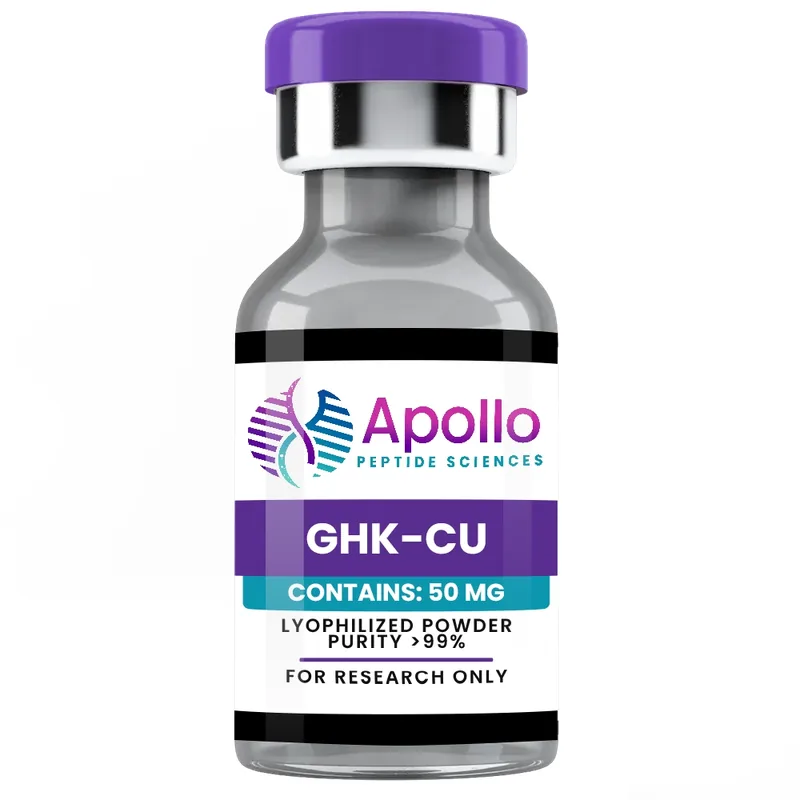
GHK-Cu 50mg
GHK-Cu (glycyl-L-histidyl-L-lysine copper complex) is a naturally occurring copper peptide present in human plasma, saliva, and urine that declines significantly with age. Extensively studied for wound healing, collagen synthesis, anti-inflammatory signaling, and skin remodeling. Research has documented upregulation of over 300 genes and downregulation of 190+ genes implicated in aging. Often researched alongside Epithalon in longevity stacks.
CAS: 49557-75-7
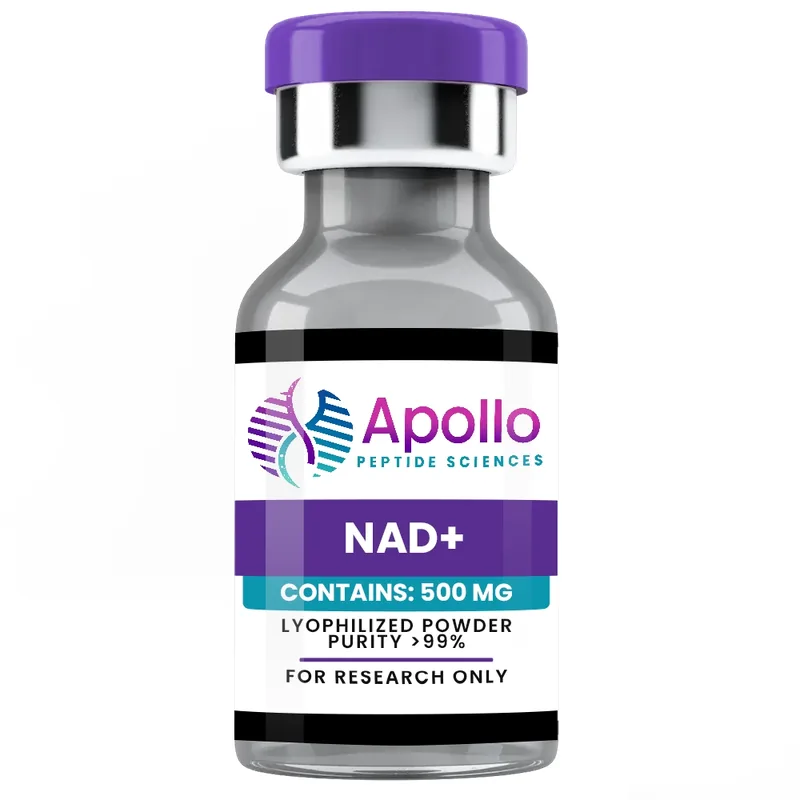
NAD+ 500mg
NAD+ (nicotinamide adenine dinucleotide) is a fundamental coenzyme in cellular energy metabolism and a key substrate for longevity enzymes including sirtuins (SIRT1–7) and PARPs. NAD+ levels decline ~50% between ages 20–50, correlating with mitochondrial dysfunction and impaired DNA repair. Research models investigate NAD+ precursors for metabolic restoration, mitochondrial biogenesis, and synergistic effects with telomere-targeting peptides like Epithalon.
CAS: 53-84-9
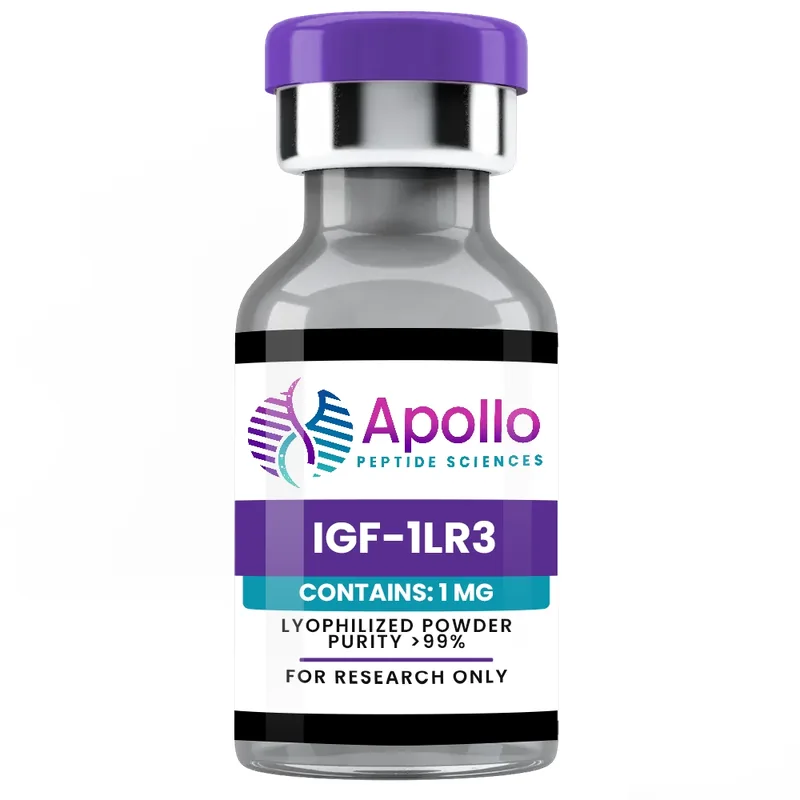
IGF-1 LR3 1mg
IGF-1 LR3 is a modified analog of Insulin-like Growth Factor-1 (IGF-1) with an extended half-life (~20–30 hours vs. ~12–15 min for native IGF-1). IGF-1 mediates many of GH's anabolic effects and declines substantially with age. Research investigates IGF-1 LR3 in cellular proliferation models, satellite cell activation, protein synthesis signaling, and the GH/IGF-1 axis in aging — a pathway closely related to epithalon's longevity mechanisms.
CAS: 946870-92-4
Epithalon 50mg
$139.99