Research Specifications
- Full Name:
- Nicotinamide adenine dinucleotide (oxidised form)
- CAS Number:
- 53-84-9
- Molecular Weight:
- 663.43 Da
- Form:
- Lyophilized powder
- Purity:
- ≥98% (HPLC verified)
- Storage:
- −20°C; protect from moisture and light
- Reconstitution:
- Sterile saline or bacteriostatic water
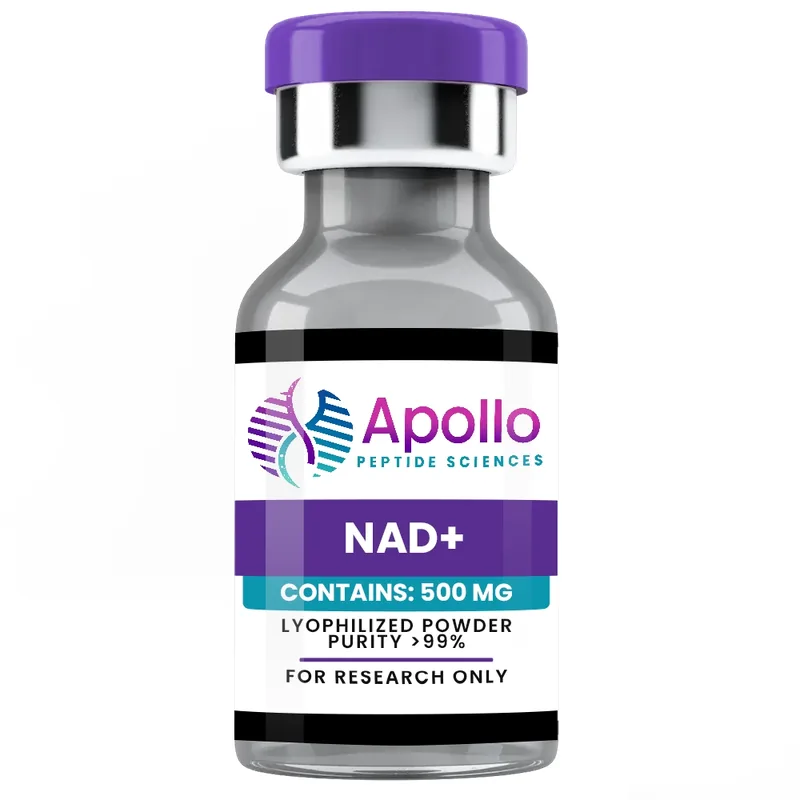
NAD+ 500mg
Nicotinamide adenine dinucleotide — the master metabolic coenzyme and longevity enzyme substrate that declines approximately 50% between ages 20 and 60.
Electron Transfer, Sirtuin Activation & DNA Repair Substrate
NAD+ (nicotinamide adenine dinucleotide, CAS: 53-84-9) is a dinucleotide consisting of adenosine monophosphate linked to nicotinamide mononucleotide via a pyrophosphate bond. It cycles between oxidized (NAD+) and reduced (NADH) forms as it accepts and donates electrons in oxidative phosphorylation, glycolysis, and the TCA cycle. Beyond its role as a redox carrier, NAD+ is a consumed substrate for three longevity-associated enzyme classes: Sirtuins (SIRT1-7) — NAD+-dependent deacylases regulating chromatin remodeling, mitochondrial biogenesis via PGC-1α, stress resistance, and inflammation; PARPs (poly ADP-ribose polymerases) — DNA damage repair enzymes; and CD38/CD157 — NAD+ glycohydrolases involved in calcium signaling. NAD+ levels decline approximately 50% between ages 20 and 60 due to increased PARP activity from accumulating DNA damage, increased CD38 expression, and decreased biosynthesis. Molecular weight: 663.43 Da.
Research Highlights
Sirtuin Activation
Sirtuins (SIRT1-7) are NAD+-dependent deacylases that regulate cellular aging. SIRT1 deacetylates histones and transcription factors including PGC-1α (mitochondrial biogenesis), FOXO3 (stress resistance), and p53 (apoptosis). All sirtuin activity requires NAD+ as a co-substrate — consumed rather than regenerated in each catalytic cycle. Declining NAD+ directly limits sirtuin activity across all these pathways.
DNA Repair & PARP Activity
PARPs (particularly PARP1) are the primary consumers of NAD+ following DNA damage. PARP1 is activated by single- and double-strand DNA breaks, consuming NAD+ to synthesize poly(ADP-ribose) chains that recruit repair machinery. With increasing DNA damage in aging cells, PARP activity escalates — further depleting NAD+ and creating a cycle of repair demand vs. metabolite availability.
Mitochondrial Function
NAD+ is essential for electron transport chain function — NADH donates electrons at Complex I, regenerating NAD+. Declining NAD+/NADH ratio impairs mitochondrial membrane potential, reduces ATP synthesis efficiency, and increases reactive oxygen species production. Research models investigating NAD+ repletion consistently show mitochondrial biogenesis improvements and reduced oxidative stress markers.
Research FAQ
What is NAD+ and why does it decline?
How is NAD+ different from NMN or NR?
How should NAD+ 500mg be stored and reconstituted?
Research Use Only. This product is intended for in-vitro laboratory research only. Not for human consumption, injection, or therapeutic use. Not medical advice. Always consult applicable regulations in your jurisdiction.
Related Products
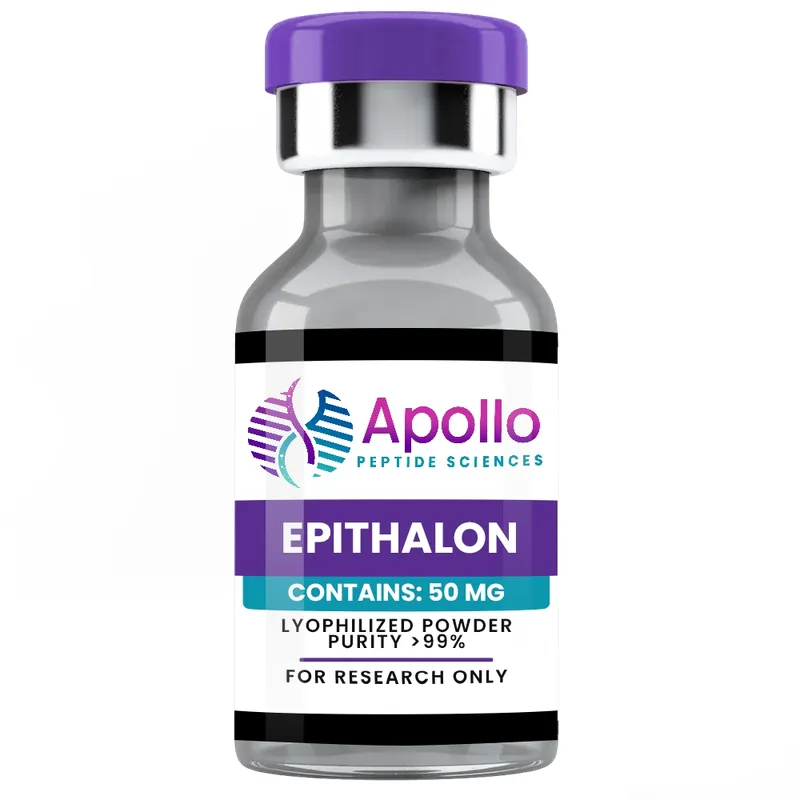
Epithalon 50mg
A synthetic tetrapeptide (Ala-Glu-Asp-Gly) derived from the natural pineal peptide epithalamin. The most studied peptide bioregulator — 40+ years of research covering telomerase activation, telomere elongation, anti-aging, melatonin regulation, and lifespan extension in rodent models. Supplied as lyophilized powder for laboratory research.
CAS: 307297-39-8
NAD+ 500mg
$69.99