What Is a Peptide?
A peptide is a chain of amino acids linked by peptide bonds — the same chemical bond that connects amino acids in proteins. The distinction is size: peptides typically contain 2–50 amino acids, while proteins contain 50 or more.
All peptides and proteins are built from the same 20 standard amino acids. What makes peptides biologically significant is their ability to act as signaling molecules — binding to specific receptors and triggering precise cellular responses at very low concentrations.
Peptide vs. Protein: Key Differences
| Property | Peptide | Protein |
| Length | 2–50 amino acids | 50+ amino acids |
| Structure | Linear or minimal folding | Complex 3D folding |
| Synthesis | Chemical synthesis (SPPS) | Biosynthesis / recombinant |
| Stability | Variable; often freeze-dried | More fragile |
| Function | Signaling, regulatory | Structural, enzymatic, transport |
How Peptides Work
Research peptides function through receptor binding. Each peptide has a defined sequence that gives it a specific three-dimensional shape, allowing it to bind to a complementary receptor on the cell surface or within the cell. Receptor binding triggers downstream signaling cascades — gene expression changes, protein synthesis, enzyme activation, or hormone release.
Key properties of research peptides:
- Specificity: A peptide designed for a particular receptor does not non-specifically activate others
- Potency: Picomolar to nanomolar activity is common — small amounts produce significant effects
- Short half-life: Most peptides are enzymatically cleaved in serum within minutes to hours
- Poor oral bioavailability: Digestive enzymes break down peptide bonds — research peptides require parenteral administration or are studied in vitro
Classification of Research Peptides
By Function
Growth hormone secretagogues (GHS): Stimulate GH release from the pituitary. Examples include Ipamorelin (ghrelin mimetic) and CJC-1295 (GHRH analog). Studied in muscle preservation and body composition research.
Tissue repair peptides: Promote healing, angiogenesis, and inflammation resolution. BPC-157 and TB-500 are the most researched compounds in this category.
Anti-aging / longevity peptides: Modulate aging pathways — telomerase activation (Epithalon), collagen synthesis (GHK-Cu), skin remodeling. The most studied compounds for longevity biology.
Skin peptides: Topical research peptides like SNAP-8 (acetylcholine release inhibition) and GHK-Cu (collagen and elastin upregulation) are studied in dermal aging models.
Incretin peptide analogs: GLP-1, GIP, and glucagon receptor agonists — semaglutide, tirzepatide, retatrutide. The fastest-growing category in metabolic research.
By Length
- Dipeptides: 2 amino acids (e.g., carnosine)
- Tetrapeptides: 4 amino acids (e.g., Epithalon: Ala-Glu-Asp-Gly)
- Pentapeptides: 5 amino acids (e.g., Ipamorelin)
- Oligopeptides: 6–20 amino acids (e.g., BPC-157: 15 aa, GHK-Cu: 3 aa complexed with copper)
- Polypeptides: 21–50 amino acids (e.g., Semaglutide: 31 aa)
Key Research Peptides
Epithalon (AEDG)
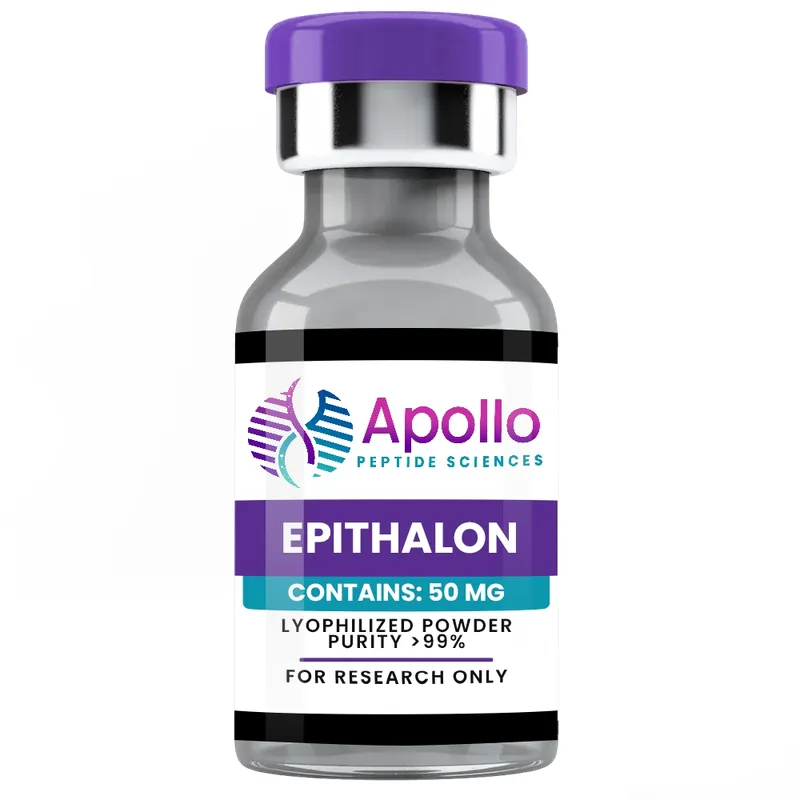
A tetrapeptide derived from the bovine pineal gland. The most studied compound in telomere biology after genetic tools — shown to activate hTERT expression in somatic cells, extending proliferative lifespan. 50mg vials are used for telomerase, anti-aging, and longevity research.GHK-Cu (Glycyl-L-Histidyl-L-Lysine Copper Complex)
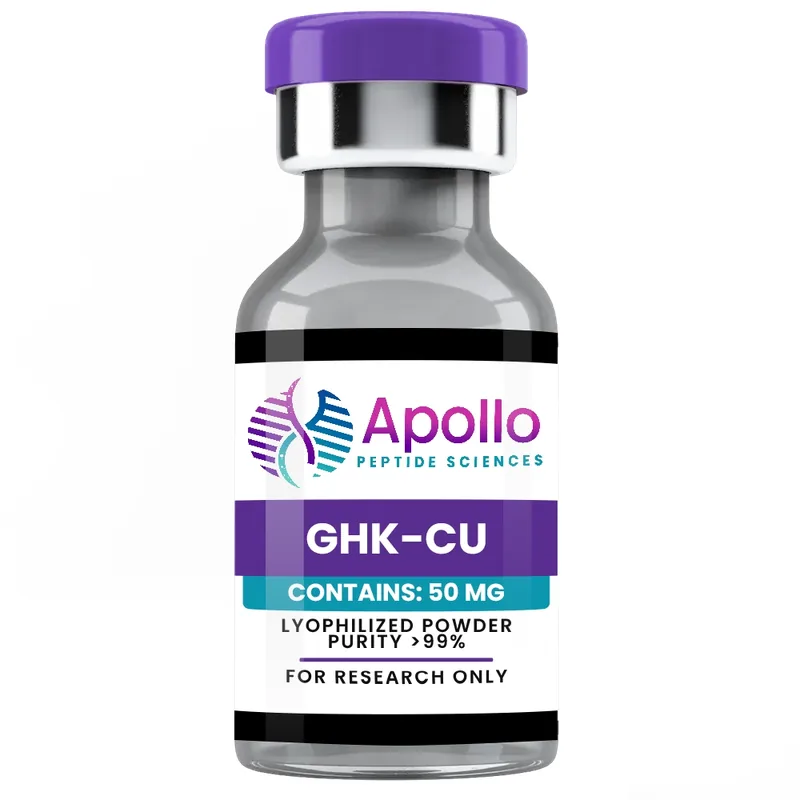
A naturally occurring copper-binding tripeptide that peaks in young adults and declines ~60% by age 60. Studied for wound healing, collagen I and III synthesis, angiogenesis via VEGF upregulation, and anti-inflammatory effects. Documented to modulate 300+ genes. Available as 50mg research compound.BPC-157 (Body Protection Compound)
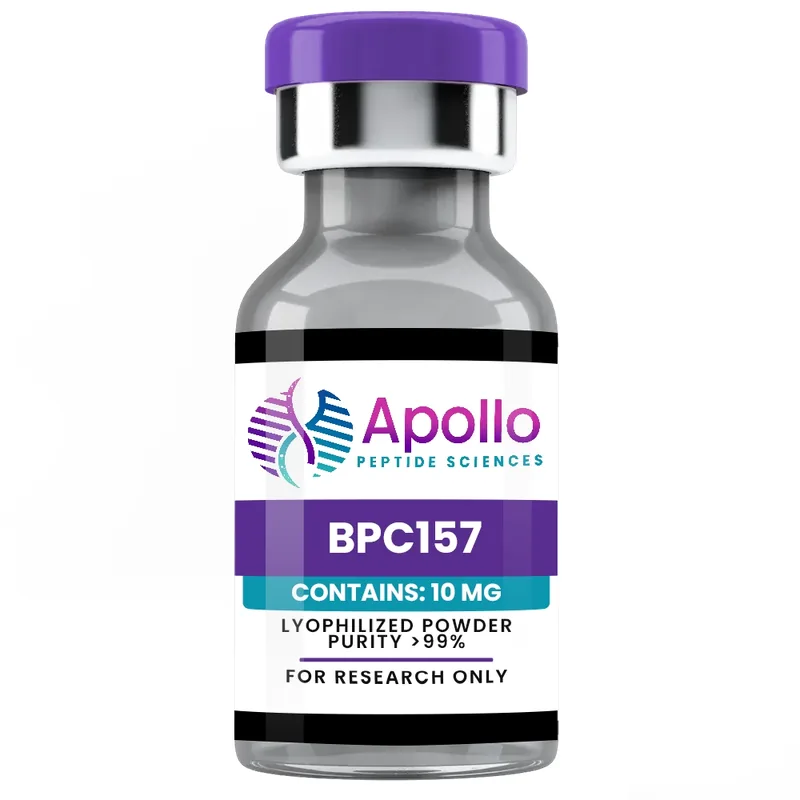
A 15-amino acid gastric peptide studied extensively for tissue repair. Acts via NO (nitric oxide) system modulation to accelerate tendon, ligament, and muscle healing. Also researched for gut lining protection — relevant when studied alongside GLP-1 receptor agonists that alter GI motility.TB-500 (Thymosin Beta-4 Fragment)
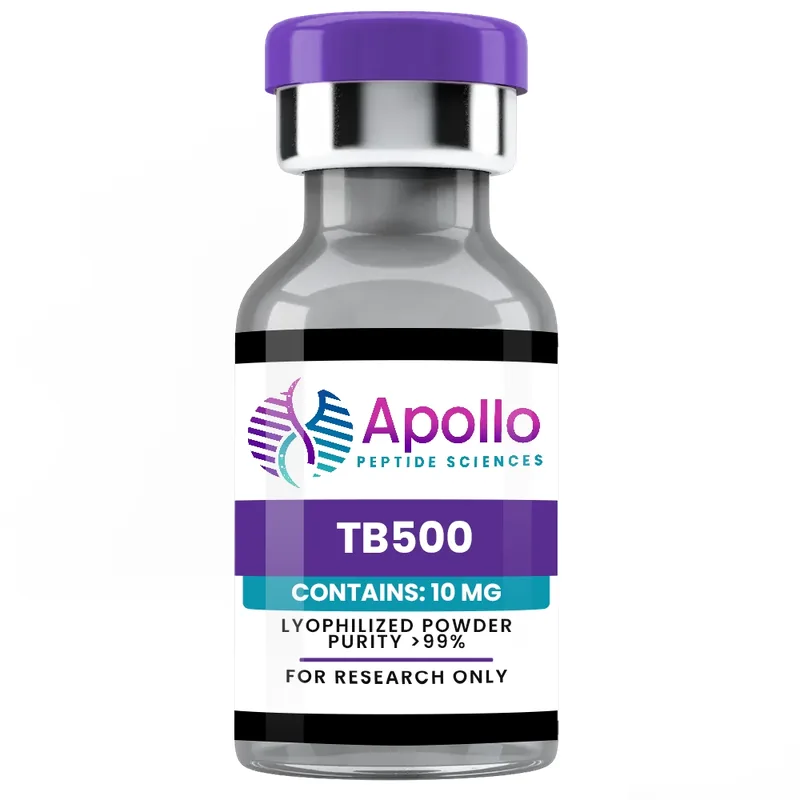
A synthetic peptide corresponding to the active region of Thymosin Beta-4, a ubiquitous intracellular protein that regulates actin polymerization. Studied for angiogenesis, cardiac protection, and anti-inflammatory activity. Frequently researched alongside BPC-157 for synergistic tissue repair protocols.SNAP-8 (Acetyl Octapeptide-3)
An octapeptide studied in wrinkle research models. Mimics the N-terminal end of SNAP-25 in the SNARE complex — research investigates inhibition of neuromuscular junction signaling relevant to expression line formation.Peptide Synthesis and Purity
Research-grade peptides are synthesized via Solid-Phase Peptide Synthesis (SPPS), where amino acids are added sequentially to a resin-bound chain. After assembly, the peptide is cleaved, purified via HPLC (High-Performance Liquid Chromatography), and lyophilized (freeze-dried) into a powder.
Key quality markers:
- Purity: >98% by HPLC is standard for research grade
- Lyophilization: Freeze-drying preserves peptide integrity; requires reconstitution with bacteriostatic water before use
- Mass spec confirmation: Verifies the correct molecular weight, confirming sequence integrity
Reconstitution
Lyophilized research peptides require reconstitution with bacteriostatic water (0.9% benzyl alcohol) before use in research. The benzyl alcohol preservative inhibits microbial growth, allowing multi-draw use from a single vial over 28 days when stored at 2–8°C.
General reconstitution principle: determine the desired concentration (e.g., 1mg/mL, 2mg/mL), then add the corresponding volume of BAC water to the vial.
Example: Epithalon 50mg vial at 2mg/mL → add 25mL bacteriostatic water.
Research Disclaimer
All peptides on this site are supplied as lyophilized powders for laboratory research applications only. They are not intended for human consumption, injection, or ingestion. Information provided is for educational and research purposes only and does not constitute medical advice.